Certified Arborist Consultation Before Buying a Property With Mature Trees
A house can be inspected in an afternoon. Mature trees cannot.
That difference catches buyers off guard. A roof leak, outdated wiring, or a cracked foundation usually shows up on a standard home inspection report. The line of oaks over the driveway, the towering pine behind the garage, or the multi-trunk maple leaning toward Tree Pruning & Crown Shaping the neighbor’s fence often gets a passing glance at best. Yet those trees can shape the property’s safety, maintenance costs, insurance profile, usable space, and even resale value for years.
Mature trees are one of the best features a property can offer. They cool the lot, soften noise, raise curb appeal, create privacy, and give a place character that new construction cannot fake. But older trees also carry history, and history matters. Decades of storm damage, poor pruning cuts, root disturbance from old trenching, soil compaction from parked vehicles, hidden decay, and neglected structural defects do not disappear just because the canopy looks green from the street.
That is why a Certified Arborist Consultation belongs in the due diligence phase when you are buying a property with significant trees. Not after closing, when the tree crew is already in the driveway and the first estimate makes your stomach drop. Before.
The trees can change the real cost of the property
Buyers are used to budgeting for obvious repairs. They set aside money for paint, appliances, flooring, maybe a water heater. Trees are different because the costs are irregular and highly variable. One property may need only routine Tree Pruning & Crown Shaping every few years. Another may require immediate Dangerous Tree Assessment and Removal for two declining conifers near the house, root zone protection for an old elm, and a follow-up plan for Tree Cable and Bracing in a codominant oak over the patio.
Those are not cosmetic line items.
A large hazardous tree removal can run into the thousands, especially if there is limited access, power line clearance issues, or crane work involved. Stump Removal & Grinding adds cost many buyers forget to include. If a tree has to come out urgently after a storm, Emergency Tree Services often cost more than scheduled work because crews are responding under pressure and demand is high. On some sites, the first year of ownership can involve enough tree work to rival a major interior remodel.
I have seen buyers fall in love with a shaded lot, then spend the first six months reacting to problems they would have identified with a pre-purchase consultation. One property had three mature eucalyptus trees framing the backyard. Beautiful at sunset, no question. Up close, the bark inclusions at major unions, heavy end weight over the roof, and long history of topping told a different story. The buyer had budgeted for landscaping. What they needed was a staged management plan that included pruning, bracing, and one eventual removal. The trees were still an asset, but only with eyes open and money reserved.
What a certified arborist sees that a general inspector often misses
A home inspector has a broad job. They are not usually hired to perform a technical tree risk assessment, diagnose species-specific disease pressure, or predict how previous construction affected root stability. A certified arborist is trained to read trees as living structures in context.
That context starts with species. A mature live oak behaves differently from a silver maple. A cedar planted too close to a foundation presents different concerns than a cottonwood near a sewer line. The arborist looks at typical lifespan, branch architecture, failure patterns, site suitability, and known pest or disease issues in your region. They also look at targets, meaning what could be hit if the tree or part of it fails. A tree over open lawn is not the same as a tree over a nursery, driveway, deck, sleeping area, or neighboring structure.
Then there is the subtle evidence. Included bark in a fork can suggest a weak union that becomes a serious structural problem under wind load. Mushrooms at the base may indicate decay, though not every fungus means imminent failure. Soil grade changes around the trunk can reveal buried root flare and chronic stress. Sparse leaf size, premature fall color, dead upper canopy, and excessive epicormic growth may point to decline. Old pruning wounds can tell you whether the tree was maintained competently or repeatedly butchered by topping.
None of this means the tree is doomed. It means the tree needs a proper reading.
A good Certified Arborist Consultation does not just answer, “Is this tree healthy?” That question is too simple. The better questions are: How healthy is it relative to age and species? How stable is it structurally? What management does it need now? What work is likely within three to five years? What can be preserved safely, and what cannot?
Mature trees are part of the property, not background scenery
It helps to think of mature trees the way you think of retaining walls, drainage systems, or long private driveways. They are site infrastructure, alive and changing, but still infrastructure. They shape how the property functions.
A large root system may limit future hardscape plans. A broad canopy may require regular clearance pruning over a roof to reduce abrasion and debris accumulation. Dense vegetation near structures may influence defensible space requirements in fire-prone areas, making Wildfire Mitigation Tree Services more than a seasonal clean-up issue. If the lot is heavily wooded, access for future construction equipment may be constrained by roots and trunks. If the seller recently added a patio, pool, trench line, or detached garage, the arborist may want to assess whether the work cut roots or compacted soil in ways that have not shown consequences yet.
This is especially important because tree problems often lag behind the event that caused them. A trench cut through major roots two years ago can weaken a tree long before visible canopy decline appears. A driveway widened over root zones may reduce soil oxygen enough to trigger gradual stress. Buyers often assume that because a tree looks fine at closing, it is fine. Sometimes it is. Sometimes it is coasting on stored energy.
What a pre-purchase arborist visit should cover
If the property has a few ornamental trees in open beds, the consultation may be straightforward. If it has mature canopy trees near structures, slopes, septic areas, driveways, or neighboring lots, ask for a detailed site review. At minimum, the assessment should give you a practical understanding of immediate risk, foreseeable maintenance, and major cost exposure.
A useful consultation often includes the following:
- Identification of species, condition, and any visible defects in significant trees.
- Evaluation of risk in relation to the house, garage, vehicles, play areas, and adjacent property.
- Recommendations for near-term work such as Tree Pruning & Crown Shaping, monitoring, Tree Cable and Bracing, or Dangerous Tree Assessment and Removal.
- Notes on site factors such as soil disturbance, grade changes, root conflict, storm exposure, and fire risk.
- A rough timeline for likely maintenance so you can budget after purchase.
Some buyers ask whether every tree needs to be assessed individually. Not always. A competent arborist can prioritize. A row of small healthy ornamentals is rarely the issue. The focus should be on trees that are large, old, structurally suspect, species-sensitive, or positioned where failure would matter.
Common surprises on older properties
The problems that matter most are not always dramatic. A dead tree leaning over a shed is obvious. The expensive surprises are often the ones that look manageable from the sidewalk.
One is old topping damage. Sellers sometimes describe a tree as “trimmed back a few years ago,” when what actually happened was severe heading cuts across the crown. Topped trees often respond with vigorous but weakly attached regrowth. For a while the canopy fills back in and the tree looks recovered. Structurally, it may be much worse than before. The new shoots can become heavy, elongated, and failure-prone, especially in fast-growing species.
Another common issue is codominant stems with included bark. To a non-specialist, a split trunk may look picturesque. To an arborist, it can be a long-term structural concern that may call for selective weight reduction, Tree Cable and Bracing, or in some cases removal if targets are high and defect severity is advanced.
Root flare burial is another frequent finding. Many older landscapes have accumulated mulch, topsoil, or decorative stone against trunk bases over time. That buried flare can contribute to decay, girdling roots, and chronic stress. Correcting it may be simple if caught early. Ignoring it can shorten the life of the tree.
Then there are trees that are not failing but are badly mismatched to the site. A massive water-seeking species planted close to sewer laterals, a brittle tree over a parking court, or a dense stand of resinous evergreens in a wildfire corridor can all push management costs far beyond what a buyer expects. In fire-prone regions, Wildfire Mitigation Tree Services may include selective thinning, limb elevation, ladder fuel reduction, and removal of dead material. That work can be essential, not optional.
When removal is the right answer
People hesitate to discuss Tree Removal Services before they own a property because it feels destructive, or because they assume every mature tree can be saved. Many can be managed and preserved. Some should be. But a serious defect in the wrong location changes the equation.
The arborist’s job is not to remove trees by default. It is to judge whether the risk can be reduced to an acceptable level through pruning, support systems, target management, or monitoring. There are plenty of situations where preservation is reasonable. There are also cases where removal is the most responsible recommendation.
A declining tree over a child’s bedroom, a heavily decayed trunk beside the only driveway, or a major root-compromised specimen leaning toward the house may not be good candidates for sentimental decision-making. Delaying removal can increase risk and, in some cases, increase cost if access worsens or emergency conditions develop later. If removal is likely, ask not only for the price of the tree work itself but also for Stump Removal & Grinding if that affects future planting, fencing, drainage, or hardscape plans.
Buyers sometimes want certainty, a clean yes or no. Trees rarely cooperate with that demand. Risk is a combination of likelihood and consequence. A tree with a moderate defect in a low-target area may be retained and monitored. The same tree over a nursery school play yard is a different decision. Good arborists explain the reasoning, not just the verdict.
Storm history matters more than buyers think
Ask about past storm damage and look for signs of prior failure. A tree that has already lost a major scaffold limb may have hidden decay in the attachment area. A trunk wound from lightning or a storm tear-out may not have compartmentalized well. Trees exposed by the removal of neighboring trees can become suddenly more wind-vulnerable because the stand conditions changed.
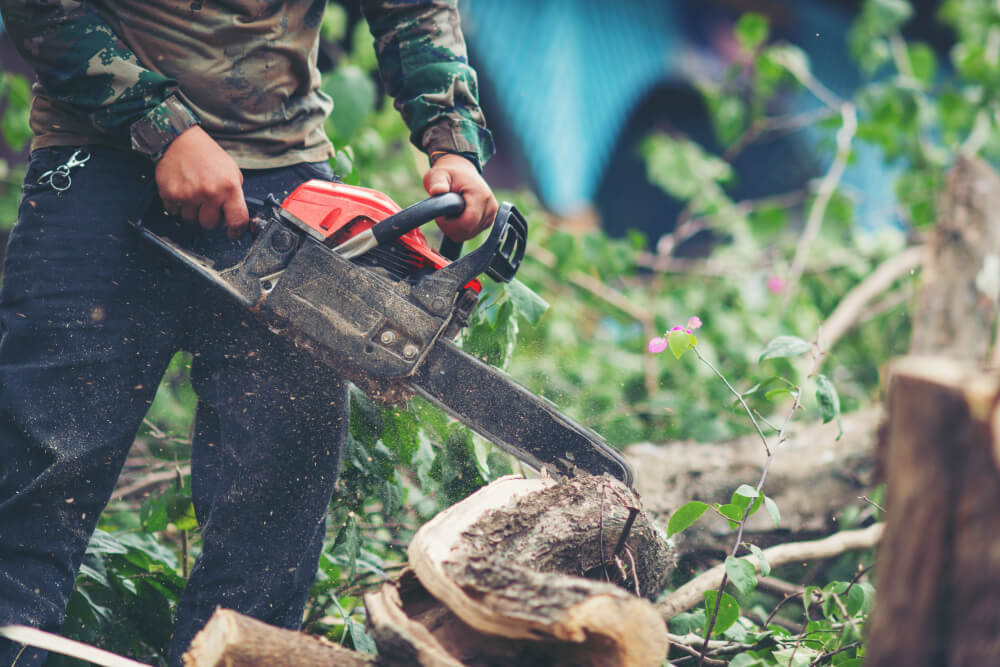
This is where Emergency Tree Services enter the conversation even before purchase. If the property is in a region with ice storms, high winds, hurricanes, heavy wet snow, or monsoon events, the arborist should assess whether certain trees are likely to become emergency calls rather than scheduled maintenance. Mature trees with long horizontal limbs over roofs, overextended leaders, weak unions, or dead upper canopy often move to the top of that list.
The practical question for a buyer is simple. Are you inheriting a stable landscape that needs normal care, or a reactive situation where the first major weather event could force expensive action?
How this affects negotiations
A pre-purchase arborist report can be useful leverage, but only if it is specific and grounded. Vague language does not help. Clear findings do. If the consultation identifies necessary removals, urgent pruning for risk reduction, or fire mitigation work required soon after closing, that https://rylanflyf662.yousher.com/eco-friendly-stump-removal-grinding-options information may support a credit request, price adjustment, or seller-performed work agreement.
It also helps buyers avoid asking for the wrong thing. I have seen negotiations get sidetracked because buyers request blanket trimming of all trees, which sounds simple but is not a meaningful arboricultural objective. A better approach is to request work tied to documented conditions. Remove the dead pine over the garage. Prune to reduce end weight on the oak over the roof. Install cabling in the split leader, if the arborist considers the tree suitable for retention. Grind the stump if it blocks the side yard access gate. Precision matters.
Sometimes the report does not justify a concession, but it still saves the buyer from making a bad assumption. That alone is valuable. Knowing that a property comes with an expected five-year tree care budget is not bad news. It is actionable news.
Not every recommendation needs to happen immediately
Buyers can overreact when they hear a list of tree issues, especially if they have never owned wooded property. A recommendation for pruning, monitoring, and soil care is not a crisis. Even some structural issues can be managed in phases.
This is where experience matters. The arborist should help separate urgent work from planned work. Immediate attention usually goes to dead trees near targets, cracked unions, hanging limbs, severe decay in critical zones, fresh root plate movement, or storm-damaged trees. Scheduled work may include crown cleaning, selective reduction, cable inspection, mulch correction, irrigation adjustment, and health monitoring over time.
That distinction protects both safety and budget. It also prevents buyers from hiring the first company that knocks on the door after a storm and suggests aggressive work that may not be necessary. Good management of mature trees is rarely about doing everything at once. It is about doing the right thing at the right time.
The value of preservation when the trees are sound
A consultation is not just a hunt for problems. It also helps buyers understand the asset they are buying.
Healthy mature trees can take decades to replace in any meaningful sense. Their environmental and aesthetic value is substantial, but the practical value is just as real. Shade can lower summer heat gain. Established roots help with slope stability in some settings. Well-placed screening can improve privacy far more effectively than new fencing alone. Properties with a stable, thoughtfully managed canopy often feel settled in a way younger landscapes do not.
An arborist can also advise how to protect that value after closing. Mature trees are often damaged by enthusiastic new owners who change grade, trench for utilities, compact root zones with parked trailers, overwater dry-adapted species, or prune without understanding branch architecture. A one-time consultation before purchase often leads to better decisions afterward because the buyer has a map of where the tree assets are and how vulnerable they may be.
Questions worth asking during the site visit
You do not need to speak in technical arborist language to get useful answers. Clear practical questions usually work better than jargon. Ask which trees worry the arborist most and why. Ask what needs attention in the first year. Ask what can wait. Ask whether any recommendation is driven by safety, tree health, insurance concerns, or long-term maintenance efficiency. Ask what damage may already have been done by past construction. If the lot is in a fire-prone area, ask what Wildfire Mitigation Tree Services would likely be recommended based on local conditions and spacing.
These five questions tend to surface the most important issues quickly:
- Which trees present the highest risk to people or structures right now?
- What work is truly urgent, and what can be planned over the next few years?
- Are any trees good candidates for preservation through pruning or bracing rather than removal?
- Do you see signs of root disturbance, decay, or past poor pruning that could change future costs?
- If you were buying this property, what tree-related expense would you budget for first?
That last question often produces the most candid answer.
Choosing the right arborist for pre-purchase advice
For a transaction like this, independence matters. You want an arborist who can assess the site honestly, not someone whose first instinct is to generate a large work order. Credentials matter, but so does communication. The best consultants can translate technical findings into plain language a buyer can use.
Look for someone who is comfortable discussing options, limitations, and uncertainty. Tree assessment is professional judgment based on visible conditions, species behavior, site history, and targets. It is not fortune-telling. If advanced testing is warranted, such as further decay investigation, that should be explained with restraint and context, not used as a scare tactic.
Regional knowledge is also important. A species that performs well in one climate can be a poor long-term bet in another. Local pest pressures, soil types, storm patterns, municipal tree ordinances, and wildfire concerns all shape the usefulness of the advice.
A mature landscape should come with informed consent
When buyers skip the tree consultation, they are often buying the landscape blind. They notice shade, privacy, and beauty. They miss structural defects, deferred maintenance, and foreseeable cost. Mature trees deserve better than that, and so does the buyer.
A sound Certified Arborist Consultation gives you more than a pass-fail answer. It tells you what you are inheriting, what is worth preserving, where Tree Removal Services may be unavoidable, whether Stump Removal & Grinding should be part of the plan, where Tree Pruning & Crown Shaping can improve safety and longevity, whether Tree Cable and Bracing makes sense, and whether future Emergency Tree Services are likely if the current issues are ignored. On wooded or fire-prone sites, it can also frame the scope of Wildfire Mitigation Tree Services before those needs become urgent.
A property with mature trees can be a remarkable purchase. It can also be a long-term liability disguised as charm. The difference often comes down to whether someone qualified walked the site before the papers were signed.
Name: Ace Tree Services Ltd.
Address: 4656 Wallace Hill Rd, Kelowna, BC V1W 4C2, Canada
Phone: 250-212-9593
Website: https://acetree.ca/
Email: [email protected]
Hours:
Sunday: Closed
Monday: 7:00 AM–5:00 PM
Tuesday: 7:00 AM–5:00 PM
Wednesday: 7:00 AM–5:00 PM
Thursday: 7:00 AM–5:00 PM
Friday: 7:00 AM–5:00 PM
Saturday: 7:00 AM–5:00 PM
Time zone: Pacific Time
Open-location code / Plus code: RHF8+8G Kelowna, British Columbia, Canada
Map/listing URL: https://www.google.com/maps/search/?api=1&query=Google&query_place_id=ChIJxRVIBx2LfVMRNRSkp6-IC0U
Embed iframe:
Socials:
https://www.facebook.com/p/Ace-Tree-Services-61585901931447/
Ace Tree Services Ltd. provides professional tree care from its Kelowna location on Wallace Hill Road.
The official website lists tree removal, stump removal and grinding, tree pruning and crown shaping, emergency tree services, certified arborist consultation, dangerous tree assessment and removal, tree cabling and bracing, and wildfire mitigation.
Ace Tree Services serves homeowners, businesses, and property owners in Kelowna and throughout the Okanagan Valley.
The company’s official site highlights ISA Certified Arborist support, local Okanagan experience, and fully insured tree service work.
Customers can contact Ace Tree Services for planned tree maintenance, high-risk removals, storm-related tree concerns, pruning, stump grinding, and arborist consultation needs.
The supplied public listing address is 4656 Wallace Hill Rd, Kelowna, BC V1W 4C2, near rural and residential service areas in southeast Kelowna.
For tree services in Kelowna and the Okanagan, call 250-212-9593, email [email protected], or visit https://acetree.ca/
The public map listing uses plus code RHF8+8G Kelowna, British Columbia, Canada and can help customers find Ace Tree Services Ltd. near Wallace Hill Road.
Popular Questions About Ace Tree Services Ltd.
What does Ace Tree Services Ltd. do?
Ace Tree Services Ltd. provides tree removal, stump removal and grinding, tree pruning and crown shaping, emergency tree service, certified arborist consultation, dangerous tree assessment and removal, tree cabling and bracing, and wildfire mitigation.
Where is Ace Tree Services Ltd. located?
Ace Tree Services Ltd. is listed at 4656 Wallace Hill Rd, Kelowna, BC V1W 4C2, Canada.
What phone number should customers call?
Customers can call Ace Tree Services Ltd. at 250-212-9593.
What is the email address for Ace Tree Services Ltd.?
The supplied email address is [email protected].
What are Ace Tree Services Ltd.’s hours?
The supplied listing hours show Monday through Saturday from 7:00 AM to 5:00 PM, with Sunday closed, Pacific Time. The official website lists 7:00 AM to 5:00 PM, Monday through Friday, so customers should confirm Saturday availability before booking.
Does Ace Tree Services Ltd. provide emergency tree service?
Yes. The official website lists emergency tree services, including emergency tree removal, dangerous tree assessment, emergency stabilization, and limb or branch cleanup.
Does Ace Tree Services Ltd. offer arborist consultations?
Yes. The official services page lists certified arborist consultation as one of the company’s Okanagan tree services.
Does Ace Tree Services Ltd. provide stump grinding?
Yes. The official services page lists stump removal and grinding as a service.
What areas does Ace Tree Services Ltd. serve?
The official website states that Ace Tree Services serves Kelowna and the Okanagan Valley.
How do I contact Ace Tree Services Ltd.?
Call 250-212-9593, email [email protected], visit https://acetree.ca/, or use the listed social profile: Facebook.
Landmarks Near Kelowna, BC
Wallace Hill Road: The road listed for Ace Tree Services Ltd. and a practical reference point for the company’s Kelowna location.
East Kelowna: A nearby rural and residential area where tree maintenance, pruning, removals, and wildfire mitigation can be important for property owners.
Myra-Bellevue Provincial Park: A major outdoor landmark southeast of Kelowna and a useful reference for the surrounding hillside and forested areas.
Gallagher’s Canyon: A nearby Kelowna community with residential properties, mature trees, and landscape maintenance needs.
Kettle Valley: A southeast Kelowna neighborhood with homes, parks, and landscaped properties.
Mission Creek Greenway: A well-known natural corridor in Kelowna and a local reference point for tree-lined recreation areas.
Orchard Park Shopping Centre: A major Kelowna retail landmark and citywide reference point.
Downtown Kelowna: A central business and residential district within Ace Tree Services’ broader Kelowna service area.
Okanagan Lake: A major regional landmark running through Kelowna and the surrounding Okanagan Valley.
Mission Creek Regional Park: A recognizable Kelowna park and natural landmark with extensive trees and trails.
Rutland: A large Kelowna community with residential and commercial properties that may need tree service support.
Glenmore: A Kelowna neighborhood with homes, parks, and established trees.
Lower Mission: A residential and lake-adjacent Kelowna area where pruning, tree health, and property safety can matter for homeowners.
Kelowna International Airport: A major transportation landmark north of central Kelowna.
West Kelowna: A nearby Okanagan community across the lake and a practical regional service reference.
For tree removal, stump grinding, pruning, crown shaping, emergency tree service, arborist consultation, dangerous tree assessment, cabling and bracing, or wildfire mitigation near these Kelowna and Okanagan landmarks, contact Ace Tree Services Ltd. at 250-212-9593, email [email protected], or visit https://acetree.ca/