Tree Cable and Bracing for Storm Preparation and Structural Support
Storm damage rarely starts with a dramatic snap. More often, it begins with a weak union that has been flexing for years, a long lateral limb over a driveway, or a mature tree carrying more weight than its structure can safely support. By the time a homeowner notices the risk, the tree may already be under significant strain. That is where tree cable and bracing enters the conversation, not as a cosmetic fix, but as a structural support system that can extend the safe life of a valuable tree.
I have seen this play out with old oaks over roofs, codominant maples splitting above patios, and ornamental trees in tight urban spaces where stump grinding and removal removal would change the whole property. In many of those cases, the right support system, paired with careful pruning and ongoing monitoring, made the difference between preserving the tree and losing it after the next major wind event.
Cable and bracing work is often misunderstood. Some property owners assume it is a permanent cure. Others think it is a last resort before removal. In practice, it sits somewhere in between. It is one tool in a broader arboricultural strategy, often used alongside Tree Pruning & Crown Shaping, Certified Arborist Consultation, and, when conditions warrant, Dangerous Tree Assessment and Removal. The key is knowing when support will meaningfully reduce risk and when the tree has structural defects too severe to justify intervention.
What tree cable and bracing actually does
Cabling and bracing are support techniques designed to limit excessive movement and reduce stress on weak parts of a tree. A cable, usually installed high in the canopy, helps redistribute load between stems or major branches. A brace rod, installed through a weak union or cracked section, adds rigid support where the wood itself is compromised.
The system is not there to make a tree rigid. Trees need movement. That movement stimulates root development and natural taper in the wood. The goal is controlled movement, enough flexibility for the tree to function normally, but not so much that a defect is likely to fail during wind, heavy rain, or wet snow.
This distinction matters. I have inspected trees where support hardware was installed too low, too tight, or in the wrong place entirely. In those cases, the hardware gave the owner confidence without providing much real protection. Good support work depends on species, age, defect type, canopy architecture, exposure to weather, and the targets below, meaning what would be hit if the tree failed.
A leaning pine in a back field and a mature beech hanging over a nursery school require very different judgments, even if both show similar defects.
The kinds of trees that benefit most
Not every compromised tree is a candidate. Some trees respond well to support because they are vigorous, historically stable, and structurally valuable despite one or two correctable weaknesses. Others have too many overlapping defects for support to make sense.
The best candidates often include mature shade trees with codominant stems. These are trunks or leaders of similar size growing from the same point. They commonly form bark inclusions, where bark gets trapped between stems instead of developing strong wood-to-wood attachment. Under storm load, those unions can split apart with surprising speed.
Historic trees and specimen trees also come up often. A large oak that anchors the front of a property may have both practical and sentimental value. If the tree is otherwise healthy, a support system can buy years, sometimes decades, of safe retention. The same goes for trees in landscapes where replacement would take a generation to restore.
Fruit trees, ornamental cherries, and magnolias sometimes benefit as well, especially when branch structure has become uneven or one side of the crown carries excessive weight. That said, species matters. Brittle-wooded trees with extensive decay may not hold hardware reliably, and aggressive fast growers can outpace support systems if maintenance is neglected.
This is why a Certified Arborist Consultation should come before installation. You need someone who can distinguish between manageable structural weakness and a tree that is simply in decline.
Cabling versus bracing, and why the difference matters
People often use the terms together, but they are not interchangeable. Cabling is generally used in the upper crown to reduce the chance of separation between stems or major limbs. Bracing uses steel rods in lower, more rigid parts of the structure, often near a crack, split, or weak crotch.
A simple way to think about it is this: cables limit movement, braces reinforce failure points.
In real jobs, the two are often paired. A silver maple with a visible crack at a union may get a brace rod through the split area and a cable higher up to reduce future stress. Without the cable, the rod may carry more strain than it should. Without the rod, the cracked section may continue to open under load.
There are also dynamic and static systems. Static cabling uses steel hardware with limited stretch, creating firmer support. Dynamic systems use synthetic materials that allow more movement. I have seen dynamic systems work well in younger trees or in cases where preserving natural sway is especially important. Static systems tend to be more common where the risk is higher and the defect more pronounced. Neither is automatically better. The right choice depends on the defect and the tree’s biomechanics.
Storm preparation starts long before the forecast
Property owners often call after a storm warning has already been issued. Sometimes there is still time for emergency risk reduction, but support work is most effective when planned before the season turns severe.
Late summer and fall are common periods for inspections because canopies are easier to assess after a season of growth, and support can be installed before winter wind and ice. In hurricane-prone or thunderstorm-prone regions, spring assessments make sense as well. The point is not the calendar alone. It is giving the tree time to be evaluated thoughtfully, pruned appropriately, and monitored rather than reacting in panic.
Tree Cable and Bracing should be part of a storm-readiness plan, not a rushed response. A support system installed in haste without evaluating root condition, canopy balance, or internal decay can create a false sense of security. I have seen homeowners spend money on cables for trees that really needed Dangerous Tree Assessment and Removal because the trunk base was already failing.
Storm preparation also includes reduction pruning in some cases. If a tree has a long, overextended limb, support may help, but reducing the sail effect through selective Tree Pruning & Crown Shaping often does just as much to lower risk. Arboriculture works best when these tools are combined with judgment rather than treated as one-size-fits-all fixes.
Warning signs that deserve a closer look
Most structural failures leave clues before they happen. Some are subtle, others obvious. Homeowners are not expected to diagnose them precisely, but they should know what to watch for.
- A visible crack where two large stems join
- Bark squeezed inward between codominant stems
- One heavy branch extending far beyond the rest of the canopy
- Sudden leaning or fresh soil lifting near the base
- Repeated limb drop after moderate wind
Any one of these signs warrants inspection, especially if the tree stands near a home, driveway, sidewalk, play area, or utility line. A weak union over open woodland is one thing. The same defect over a bedroom is another.
After severe weather, a follow-up inspection matters even if the tree remained standing. High winds can enlarge hidden cracks, loosen root plates, and shift load paths in ways that are not obvious from the ground. This is one reason Emergency Tree Services often begin with triage. The problem is not always the branch that fell. Sometimes it is the damaged stem still attached overhead.
How arborists decide whether support is worth doing
The decision is rarely based on one defect alone. It is a risk management question shaped by structure, vitality, site use, and budget.
A responsible arborist will look at crown architecture, branch attachment, trunk condition, species failure patterns, decay presence, root zone disturbance, and what sits within striking distance. They may use sounding, resistance drilling, or other diagnostic methods if internal decay is suspected. Good decisions come from the full picture, not from one glance upward.
This is where homeowners sometimes face an uncomfortable truth. The tree they hoped to preserve may still be too hazardous. Cabling does not fix advanced root decay. Bracing does not restore wood strength that has already been lost to a large hollow. Even a beautifully installed system cannot compensate for a failing root plate or a trunk that has lost too much structural integrity.
On the other hand, I have also seen valuable trees recommended for removal too quickly by crews focused only on short-term liability. There are situations where Tree Removal Services are appropriate and necessary. There are others where support, pruning, and periodic inspection are the more balanced choice. That is why the assessment stage matters so much.
What installation should look like on a professional job
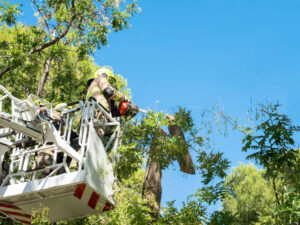
A proper installation starts with climbing or aerial access and a close inspection in the crown. Hardware placement is not guessed from the ground. The arborist identifies anchor points in sound wood, calculates approximate spacing and load distribution, and considers how the tree will move under wind.
Drilling for static hardware must be clean and deliberate. Anchor bolts and brace rods need enough sound wood around them to function safely. Cables should be placed high enough to be effective, but not in weak or undersized limbs. If pruning is part of the plan, it is usually done in coordination with the support system, not as an afterthought.
The work should also respect the tree’s biology. Every wound matters. Every cut changes load distribution. Poorly placed hardware can create future problems, especially if installed in decayed wood or left uninspected for years.
Owners sometimes ask whether support hardware damages Tree Pruning & Crown Shaping the tree. The honest answer is yes, to a limited and intentional degree. Installing bolts or rods requires drilling. But arboriculture often involves trade-offs. A small, well-placed wound may be justified if it reduces the chance of catastrophic stem failure in a high-value tree. The alternative could be major breakage, full removal, property damage, or injury.
Support systems are not set-and-forget
One of the biggest mistakes property owners make is assuming the job is finished once the cable is in place. Trees keep growing. Hardware ages. Defects change. Load shifts over time.
An installed support system should be inspected periodically, often every one to three years depending on tree condition, system type, and exposure. After major storms, inspections should happen sooner. Growth can engulf components, loosen tension, or alter how forces move through the crown. Synthetic systems have their own service-life considerations. Steel systems can corrode or become less effective if the tree outgrows the original geometry.
There is also the practical question of canopy development. A support cable installed on a 14-inch stem may not be adequate once that stem gains several inches in diameter and produces substantially more crown mass. Mature trees do not stay static. Management has to evolve with them.
This is where long-term tree care programs pay off. The same company or consulting arborist who handled the original work can track changes over time and recommend follow-up pruning, hardware adjustment, or, if decline progresses, a transition to removal. Support should be viewed as an ongoing management commitment.
When removal is the smarter decision
Preserving trees is worthwhile, but not at any cost. Some defects are simply too advanced. Others exist in places where even a reduced risk is unacceptable.
If a tree has severe root decay, extensive trunk cavity formation, multiple major scaffold failures, or obvious instability in saturated soil, Tree Removal Services may be the responsible path. The same goes for trees with repeated failures near occupied structures. At a certain point, the discussion shifts from preservation to public safety and liability.
After removal, the work is not always finished. Stump Removal & Grinding may be needed to restore the site, prevent trip hazards, or make way for replanting. In many landscapes, that opens the door to choosing a better species for the location, one less prone to structural issues or better adapted to local wind patterns and soil conditions.
Removal can feel like a loss, especially when the tree has shaded the property for decades. But delayed decisions can be costly. I have walked sites where owners spent years trying to save trees with obvious failure indicators, only to pay far more after emergency collapse damaged roofs, fences, and vehicles.
The connection to wildfire and broader risk reduction
At first glance, Tree Cable and Bracing seems unrelated to Wildfire Mitigation Tree Services, but the overlap is real in certain regions. Trees stressed by poor structure, crown imbalance, or storm damage often need broader management in fire-prone landscapes.
A split conifer over a roof in a wildfire zone presents two risks at once. It may fail under wind, and it may also contribute hazardous fuel close to the structure. In those cases, arborists may recommend selective reduction, removal of compromised lower limbs, spacing improvements, or full removal rather than support alone.
This is a good example of why tree care decisions should be site-specific. A large ornamental tree in a humid suburb can often be retained with pruning and support. A similarly defective tree next to a house in a high-fire corridor may warrant a more aggressive plan. The right answer depends on the broader hazard profile, not just the visible crack.
Questions homeowners should ask before approving the work
A short conversation before installation can prevent expensive misunderstandings. Ask what defect is being addressed, what level of risk reduction the system is expected to provide, and whether pruning is recommended at the same time. Ask how often the hardware should be inspected and what signs would trigger reevaluation.
You should also ask the harder question: if this were your property, would you support this tree or remove it?
Good professionals will answer directly. They will explain uncertainty where it exists and avoid promising that hardware makes a tree “safe.” No tree in a lived landscape is risk-free. The goal is reasonable risk reduction based on informed judgment.
A strong proposal usually includes the type of system, installation locations in plain language, related pruning scope, and follow-up expectations. If the recommendation is vague or sounds overly certain, slow down and get another opinion. That is especially important for large trees over homes, schools, or public walkways.
The value of acting before failure forces the decision
Most support work is far less expensive, and far less disruptive, than emergency cleanup after a structural break. Once a major stem tears out, the tree may no longer be salvageable. The wound becomes larger, decay exposure increases, and the canopy often loses the balance that made retention possible in the first place.
Emergency Tree Services are critical when storms hit, but no one wants to rely on them if preventive care could have reduced the damage. A timely inspection, a measured pruning plan, and properly installed support hardware can preserve shade, habitat, privacy, and property character while lowering the odds of sudden failure.
That is really the heart of cabling and bracing. It is not about saving every tree. It is about making informed, defensible choices for the trees worth keeping, especially when those trees contribute real value to a property and can be managed safely with professional oversight.
Well-executed Tree Cable and Bracing respects both biology and engineering. It recognizes that mature trees are living structures, not static objects, and that preserving them often requires intervention grounded in experience. When storms are part of your seasonal reality, that kind of planning is not an extra. It is part of responsible tree stewardship.
Name: Ace Tree Services Ltd.
Address: 4656 Wallace Hill Rd, Kelowna, BC V1W 4C2, Canada
Phone: 250-212-9593
Website: https://acetree.ca/
Email: [email protected]
Hours:
Sunday: Closed
Monday: 7:00 AM–5:00 PM
Tuesday: 7:00 AM–5:00 PM
Wednesday: 7:00 AM–5:00 PM
Thursday: 7:00 AM–5:00 PM
Friday: 7:00 AM–5:00 PM
Saturday: 7:00 AM–5:00 PM
Time zone: Pacific Time
Open-location code / Plus code: RHF8+8G Kelowna, British Columbia, Canada
Map/listing URL: https://www.google.com/maps/search/?api=1&query=Google&query_place_id=ChIJxRVIBx2LfVMRNRSkp6-IC0U
Embed iframe:
Socials:
https://www.facebook.com/p/Ace-Tree-Services-61585901931447/
Ace Tree Services Ltd. provides professional tree care from its Kelowna location on Wallace Hill Road.
The official website lists tree removal, stump removal and grinding, tree pruning and crown shaping, emergency tree services, certified arborist consultation, dangerous tree assessment and removal, tree cabling and bracing, and wildfire mitigation.
Ace Tree Services serves homeowners, businesses, and property owners in Kelowna and throughout the Okanagan Valley.
The company’s official site highlights ISA Certified Arborist support, local Okanagan experience, and fully insured tree service work.
Customers can contact Ace Tree Services for planned tree maintenance, high-risk removals, storm-related tree concerns, pruning, stump grinding, and arborist consultation needs.
The supplied public listing address is 4656 Wallace Hill Rd, Kelowna, BC V1W 4C2, near rural and residential service areas in southeast Kelowna.
For tree services in Kelowna and the Okanagan, call 250-212-9593, email [email protected], or visit https://acetree.ca/
The public map listing uses plus code RHF8+8G Kelowna, British Columbia, Canada and can help customers find Ace Tree Services Ltd. near Wallace Hill Road.
Popular Questions About Ace Tree Services Ltd.
What does Ace Tree Services Ltd. do?
Ace Tree Services Ltd. provides tree removal, stump removal and grinding, tree pruning and crown shaping, emergency tree service, certified arborist consultation, dangerous tree assessment and removal, tree cabling and bracing, and wildfire mitigation.
Where is Ace Tree Services Ltd. located?
Ace Tree Services Ltd. is listed at 4656 Wallace Hill Rd, Kelowna, BC V1W 4C2, Canada.
What phone number should customers call?
Customers can call Ace Tree Services Ltd. at 250-212-9593.
What is the email address for Ace Tree Services Ltd.?
The supplied email address is [email protected].
What are Ace Tree Services Ltd.’s hours?
The supplied listing hours show Monday through Saturday from 7:00 AM to 5:00 PM, with Sunday closed, Pacific Time. The official website lists 7:00 AM to 5:00 PM, Monday through Friday, so customers should confirm Saturday availability before booking.
Does Ace Tree Services Ltd. provide emergency tree service?
Yes. The official website lists emergency tree services, including emergency tree removal, dangerous tree assessment, emergency stabilization, and limb or branch cleanup.
Does Ace Tree Services Ltd. offer arborist consultations?
Yes. The official services page lists certified arborist consultation as one of the company’s Okanagan tree services.
Does Ace Tree Services Ltd. provide stump grinding?
Yes. The official services page lists stump removal and grinding as a service.
What areas does Ace Tree Services Ltd. serve?
The official website states that Ace Tree Services serves Kelowna and the Okanagan Valley.
How do I contact Ace Tree Services Ltd.?
Call 250-212-9593, email [email protected], visit https://acetree.ca/, or use the listed social profile: Facebook.
Landmarks Near Kelowna, BC
Wallace Hill Road: The road listed for Ace Tree Services Ltd. and a practical reference point for the company’s Kelowna location.
East Kelowna: A nearby rural and residential area where tree maintenance, pruning, removals, and wildfire mitigation can be important for property owners.
Myra-Bellevue Provincial Park: A major outdoor landmark southeast of Kelowna and a useful reference for the surrounding hillside and forested areas.
Gallagher’s Canyon: A nearby Kelowna community with residential properties, mature trees, and landscape maintenance needs.
Kettle Valley: A southeast Kelowna neighborhood with homes, parks, and landscaped properties.
Mission Creek Greenway: A well-known natural corridor in Kelowna and a local reference point for tree-lined recreation areas.
Orchard Park Shopping Centre: A major Kelowna retail landmark and citywide reference point.
Downtown Kelowna: A central business and residential district within Ace Tree Services’ broader Kelowna service area.
Okanagan Lake: A major regional landmark running through Kelowna and the surrounding Okanagan Valley.
Mission Creek Regional Park: A recognizable Kelowna park and natural landmark with extensive trees and trails.
Rutland: A large Kelowna community with residential and commercial properties that may need tree service support.
Glenmore: A Kelowna neighborhood with homes, parks, and established trees.
Lower Mission: A residential and lake-adjacent Kelowna area where pruning, tree health, and property safety can matter for homeowners.
Kelowna International Airport: A major transportation landmark north of central Kelowna.
West Kelowna: A nearby Okanagan community across the lake and a practical regional service reference.
For tree removal, stump grinding, pruning, crown shaping, emergency tree service, arborist consultation, dangerous tree assessment, cabling and bracing, or wildfire mitigation near these Kelowna and Okanagan landmarks, contact Ace Tree Services Ltd. at 250-212-9593, email [email protected], or visit https://acetree.ca/